

Drum dispenser
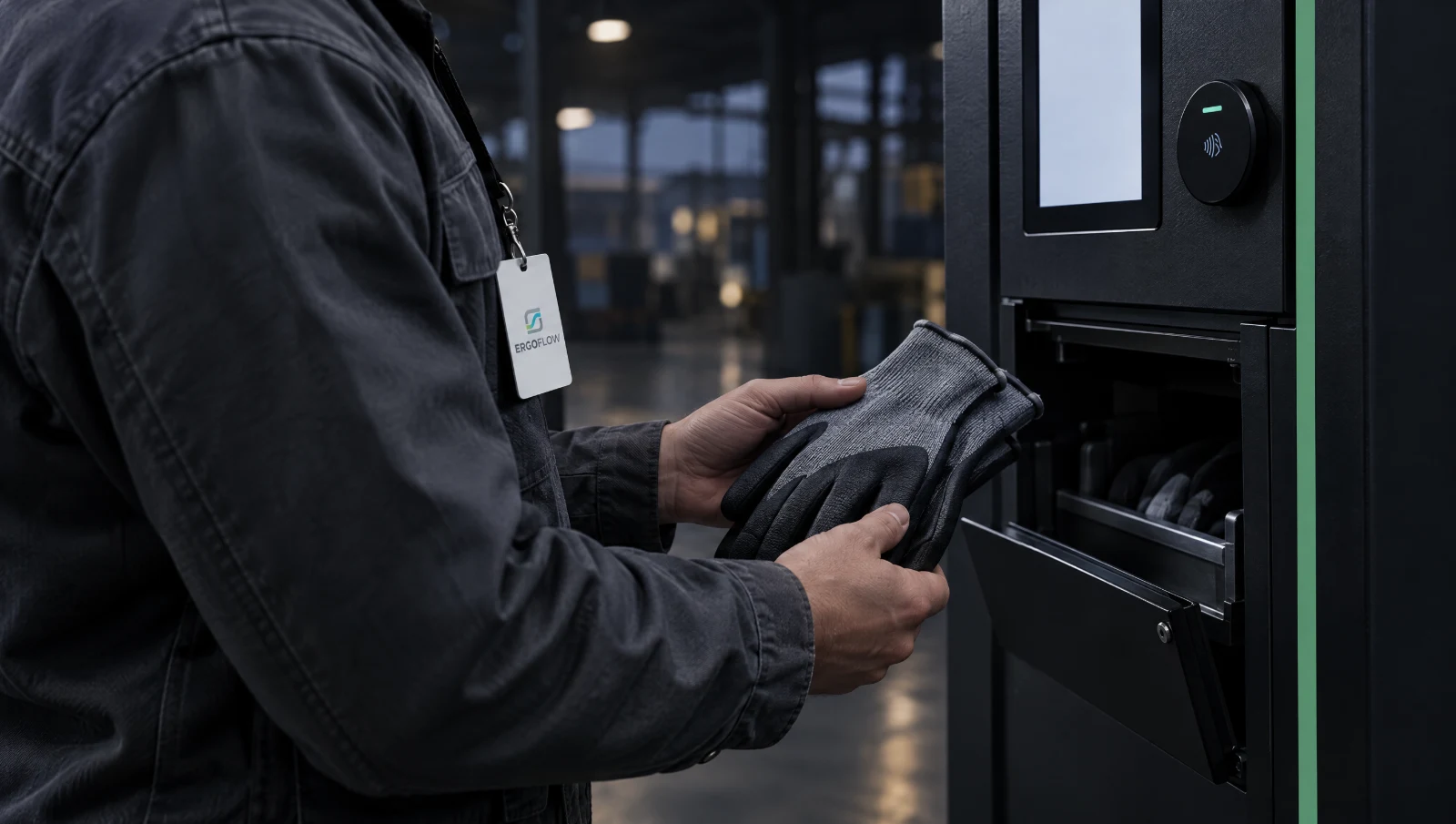
Gloves, safety glasses, earplugs and small items by card, within an allowance per person and period.
Gloves, safety glasses, earplugs and workwear reach the employee according to the allocation standard, by card, at any time. Every issue has a name, date and period of use, so PPE records are created at the moment of issue, not afterwards.
We choose what the plant needs. Each element can be deployed on its own.
Gloves, safety glasses, earplugs and small items by card, within an allowance per person and period.
Equipment that has to come back: one item per locker, the return recorded like an issue.
The employee chooses the size, the order comes from the standard, the issue has proof.
Medical examinations, training and qualifications with deadlines, next to PPE allocations.
Collection and confirmations for employees without a computer, by card or PIN.
Automation does not change the employer's obligations. It makes them easier to document.
Providing personal protective equipment free of charge and informing employees how to use it.
Providing workwear and footwear free of charge, or an allowance for using their own.
The types of PPE, workwear and footwear and their expected periods of use are set by the employer.
A ban on allowing work without the required protective equipment, workwear and footwear.
Regulation of 10 December 2018: a record card of the allocation of workwear, footwear and PPE for each employee.
The retention period for employee records, including allocation record cards.
Record cards, allocation standards, the laundry allowance. Posts with the legal basis.
A cash equivalent for using one’s own workwear and for laundering may be paid only in specific situations and in an amount that can be justified. How to calculate and document it.
Workwear protects the employee’s clothes; PPE protects the employee. This difference leads to different obligations, different documents and different rules on using one’s own clothing.
What the employer must do in the first hour after an accident, whom to notify, who sits on the accident investigation team and by when the report is drawn up.
Training, medical examinations, PPE, workwear, PIP inspections. A new post every week.
The allocation standard is recorded in the system, the employee takes what they are entitled to with their card, and every issue goes straight into the records. Nobody copies a logbook into a spreadsheet or keeps track of allowances from memory.
An issue with identification records what should be on the card: the person, item, date and period of use. The record card is built from this data. It is worth agreeing the form of documentation with your OHS service.
A machine is one of the options. Standards, entitlements and records can be kept in the application, with issues from the warehouse against a signature or at a kiosk.
Items issued repeatedly: gloves, safety glasses, earplugs, face masks, small tools. Equipment that has to come back goes into the lockers of a locker dispenser.
No. They see only the items assigned to their position and only as much as they are entitled to in a given period.
Yes. The machine issues at two in the morning just as at ten, without opening the warehouse.
With an audit: what you issue today, to whom and how often. That gives the list of items for the machine, the standards to record and the scope of integration.
The presentation takes fifteen minutes. At the end you know what makes sense in your plant.